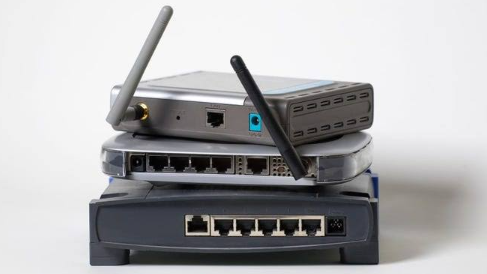
Routers and switches form the core of modern networks, each with distinct duties. Switches handle local frame forwarding, creating fast, collision-free paths within a VLAN-rich LAN. Routers determine inter-network routes, guiding traffic toward external destinations and between segments. Their functions complement each other to achieve scalable, secure, and reliable connectivity. The interaction between devices shapes performance, resilience, and policy enforcement, inviting consideration of deployment strategies, firmware coherence, and management practices as networks grow. This interplay sets the stage for more precise distinctions and decisions.
The Role of Routers and Switches
Networks rely on routers and switches to establish and manage paths between devices. The topic centers on structural roles within a network, detailing how routing protocols determine reachability, and how switch fabrics enable parallel data paths.
IP routing mechanisms translate logical addresses into forwardable instructions, while VLAN trunking consolidates multiple domains. This balance supports freedom through disciplined, transparent control over connectivity and scalability.
See also: zoneturf
How Routers and Switches Work Together
How do routers and switches collaborate to forward data efficiently? They interoperate through layered functions: routers determine next hops and route paths, while switches handle local frame forwarding within networks.
Coordination reduces latency by using summarized topologies from networking diagrams, preserving loop-free paths.
Firmware updates synchronize control plane and data plane behavior, ensuring consistent forwarding rules across devices.
Key Differences Between Routers and Switches
Routers and switches serve distinct roles within a network, with the former directing traffic between networks and the latter facilitating efficient movement within a single network.
Key differences lie in scope, device logic, and data handling: routers use routing protocols to determine paths across segments, while switches rely on switch configurations to optimize local frame forwarding. This separation clarifies design and performance trade-offs.
Choosing the Right Devices for Your Network
Selecting appropriate devices hinges on aligning network requirements with device capabilities. The selection process analyzes traffic patterns, scalability, and reliability, then matches hardware features such as throughput, port density, and security options. Priority is given to solutions that balance performance with ease of management.
Emphasis on network security and wireless integration ensures cohesive policy enforcement and uninterrupted, flexible access for users seeking freedom.
Frequently Asked Questions
Can Routers and Switches Be Combined Into One Device?
Yes, a single device can combine routing and switching functions. This edge routing-capable appliance handles traffic at the network edge, emphasizing PoE considerations and consolidated management, with a precise, methodical design suited for an audience seeking freedom.
How Do Routers Determine the Best Path Dynamically?
Dynamic routing enables routers to determine path selection by exchanging topology information and computing optimal routes. They evaluate metrics, converge through algorithms, and adjust routes in response to changes, maintaining scalable, efficient, and resilient networks for a freedom-seeking audience.
What Are Qos Features on Switches and Routers?
Quality of service features on devices include prioritization, shaping, and policing, enabling Network segmentation. VLAN tagging supports traffic isolation; Routing decisions rely on Dynamic path selection and Layer operation, while QoS governs queuing, bandwidth, and precedence for freedom-loving networks.
Do Switches Operate at Layer 2 or Layer 3?
55% of network traffic traverses Layer 2 in typical campus designs, highlighting a pivotal stat. Switches operate primarily at layer 2, though some multilayer devices can perform routing decisions. This blends switching fundamentals with selective routing decisions.
How Does VLAN Tagging Affect Routing Decisions?
VLAN tagging influences routing decisions by separating broadcast domains; routers use tag information to route inter-VLAN traffic. It interacts with QoS features, Layer 2 vs Layer 3 roles, device convergence, and dynamic routing protocols.
Conclusion
In essence, routers and switches form a precise, complementary lattice that binds networks together. Switches orchestrate local, high-speed frame forwarding, while routers carve intelligent paths across subnets and external networks. Their collaboration creates scalable, resilient infrastructures, with VLANs and routing policies aligning security and efficiency. Together they prevent traffic dead ends and reduce latency, like gears meshing in a well-tuned machine. This harmony, a quiet backbone, ensures reliable connectivity across complex, evolving environments.
